
Cross Lease vs Freehold NZ: What Christchurch Buyers Need to Know
Quick Answer: A cross lease means you share ownership of the land with your neighbours and hold a 999-year lease over your specific dwelling. A freehold (fee simple) title gives you outright ownership of both the land and the building. Cross-lease properties in Christchurch typically sell for 5-10% less than equivalent freehold homes, and you'll need your neighbours' consent for any external changes.
What's in This Guide
- What Is a Cross Lease?
- Cross Lease vs Freehold: Key Differences
- Cross Lease Disadvantages Buyers Should Know
- Flat Plans: The Document That Matters Most
- Converting Cross Lease to Freehold in Christchurch
- Buyer Checklist: What to Check Before You Buy
- Why Work With Hayden Roulston
- Frequently Asked Questions
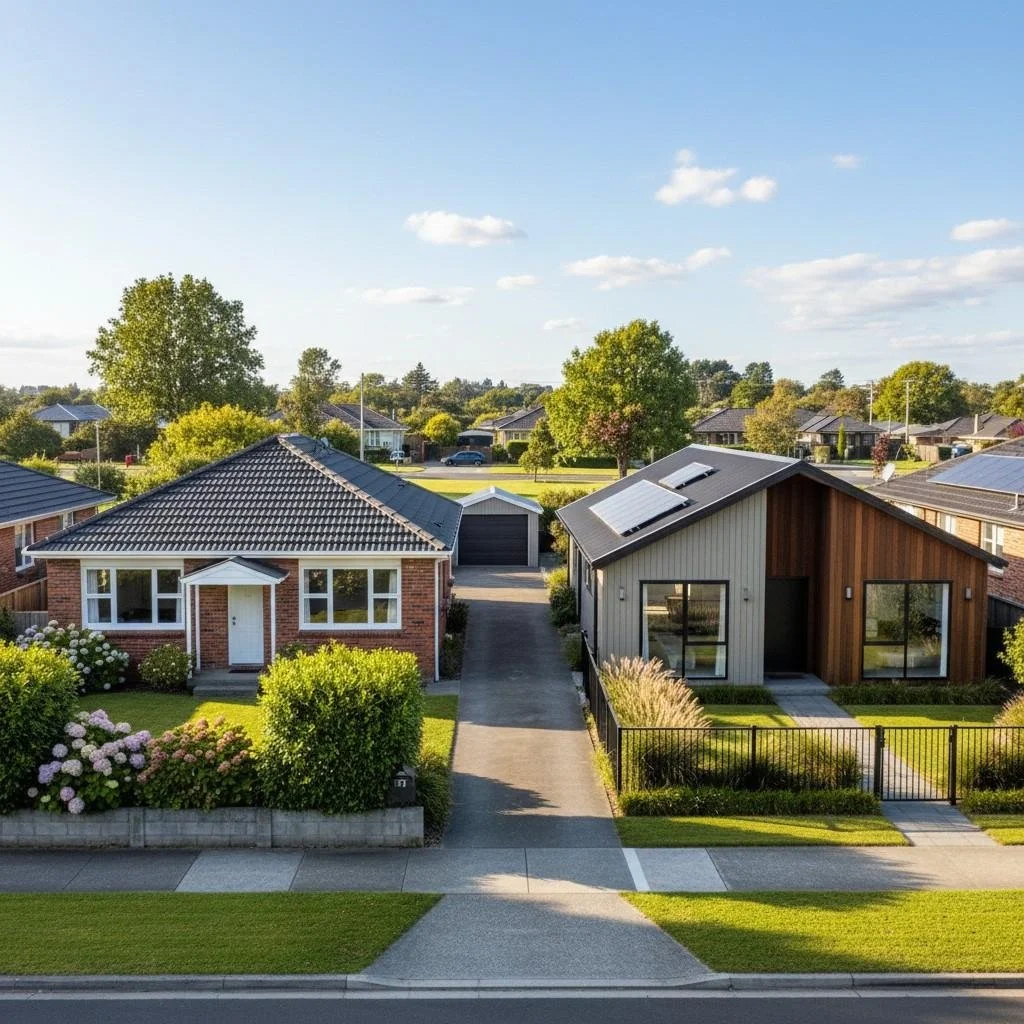
What Is a Cross Lease in New Zealand?
A cross lease is a form of property ownership unique to New Zealand. It was developed by lawyers in the 1960s as a way to subdivide sections without going through the full council subdivision process. The arrangement was widely used through the 1970s and 1980s, particularly in suburbs where homeowners wanted to split their land and build a second dwelling.
Under a cross lease, two or more owners share the freehold title to a piece of land as tenants-in-common. Each owner then holds a long-term lease — typically 999 years — over their individual dwelling and its footprint, which is defined on a legal survey document called a flats plan.
So if you buy a cross-lease property in a two-unit development, you own a half share of the entire land, plus a 999-year lease for your specific house. Your neighbour owns the other half share and holds their own lease for their dwelling.
No new cross leases can be created today. The Resource Management Act 1991 classified cross leases as subdivisions, meaning they now require full subdivision consent. All cross-lease properties on the market are existing housing stock, mostly built between the 1960s and early 1990s.
In Christchurch, cross-lease properties are common in established suburbs where sections were subdivided during those decades. They make up a significant portion of the city's more affordable housing stock.
Cross Lease vs Freehold: Key Differences
Understanding the difference between cross lease and freehold is essential before making an offer on any Christchurch property. Here's how the two title types compare across the factors that matter most to buyers.
| Factor | Freehold (Fee Simple) | Cross Lease |
|---|---|---|
| Land ownership | You own the land outright | You share an undivided interest with co-owners |
| Building ownership | You own the building outright | You hold a 999-year lease over your dwelling |
| Renovations | Only need council consent | Need council consent AND all co-owners' written consent for external changes |
| Property value | Generally highest | Typically 5-10% lower than equivalent freehold |
| Bank lending | Straightforward | Some lenders are cautious, especially with defective titles |
| Ongoing obligations | Rates and insurance only | Rates, insurance, plus shared maintenance responsibilities and lease covenants |
| Future development | Full flexibility within council rules | Limited by neighbour consent requirements |
What About Unit Titles?
Unit titles are a third type of ownership, commonly used for apartments and townhouse complexes. Unlike cross lease, unit title owners hold outright ownership of their individual unit and share common areas through a body corporate. Unit titles are governed by the Unit Titles Act 2010 and involve regular body corporate levies. Cross leases have no formal body corporate structure — they rely on the covenants in the lease agreement.
Cross Lease Disadvantages Buyers Should Know
Cross-lease properties can offer good value, but you need to understand the risks before committing. Here are the main disadvantages.
1. You Need Your Neighbours' Consent for External Changes
This is the biggest limitation. Any change to the external footprint of your dwelling — a deck extension, a new carport, a conservatory, even converting a window to a French door — requires written consent from every co-owner on the title. If one neighbour refuses, your plans are blocked.
Internal renovations like kitchen or bathroom upgrades don't require co-owner consent, as long as they don't alter the building's external dimensions.
The 2024 High Court decision in Martelli v Liow made this process somewhat easier by lowering the legal bar for what counts as "unreasonably withholding" consent. Previously, owners had to prove their changes would cause only "trifling detriment" to the objecting neighbour. Now, the test is simply whether a reasonable person would consent in the circumstances. However, this case is under appeal.
2. Defective Titles Are Common
If a previous owner made external alterations without updating the flats plan, the title becomes defective. This is surprisingly common — a deck that was added years ago, a garage conversion, or even a garden shed can cause a title defect if it changed the building footprint.
A defective title can:
- Make it harder to get mortgage approval
- Reduce the property's sale price
- Cost $15,000-$25,000+ to fix in Christchurch
- Take 3-9 months to resolve
3. Lower Resale Value
Cross-lease properties generally sell for less than equivalent freehold homes. Research from the Property Institute of New Zealand suggests the discount can be up to 7.5%, though it varies by location and property condition. This price difference reflects the restrictions and risks that come with the title type.
4. Lending Can Be More Difficult
Most banks will lend on cross-lease properties, but some are more cautious — particularly if there's a title defect. You may face stricter lending conditions, higher deposit requirements, or outright decline if the flats plan doesn't match the physical buildings.
5. Shared Responsibilities With Neighbours
Cross-lease covenants typically require owners to share maintenance costs for common areas like driveways, fencing, and drainage. The quality of this arrangement depends entirely on the relationship between co-owners. A cooperative neighbour makes it seamless; a difficult one can make it a constant source of frustration.
6. The 2026 Granny Flat Rules Don't Help
New legislation from early 2026 allows granny flats up to 70sqm to be built without building consent. However, cross-lease owners still need their co-owners' consent even though council consent is no longer required. And if built, the granny flat must be shown on the flats plan, or the title becomes defective.
Flat Plans: The Document That Matters Most

The flats plan is the legal backbone of any cross-lease property. It's a surveyed drawing held by Land Information New Zealand (LINZ) that shows:
- The layout of each dwelling on the land
- The boundaries of each lease area (marked with dotted lines)
- Common areas like driveways and shared paths
- Any exclusive-use areas allocated to individual owners
The golden rule is simple: what's on the ground must match what's on the flats plan. If it doesn't, the title is defective.
Common Flat Plan Issues in Christchurch
Christchurch has an additional layer of complexity. LINZ rules require that where a new flats plan updates an existing cross-lease development, any underlying parcel boundary affected by Canterbury earthquake land movement must be surveyed and marked. This can add extra cost and time to updating a flats plan or converting to freehold in earthquake-affected areas.
Common issues to look for:
- Decks, conservatories, or extensions not shown on the plan
- Garages or carports added after the original flats plan was filed
- Garden sheds or structures within the lease area boundary
- Fencing that doesn't align with the plan's exclusive-use areas
- Post-earthquake rebuilds that changed the building footprint
How to Get a Copy
Your lawyer can order the flats plan from LINZ during the due diligence period. Compare it carefully with what you see on the property. If anything doesn't match, get legal advice before going unconditional.
Converting Cross Lease to Freehold in Christchurch
If you already own a cross-lease property — or you're buying one with plans to convert — here's what the process involves in Christchurch.
The Process
- Get agreement from all co-owners. Every owner on the cross-lease title must agree to convert. Without unanimous consent, conversion cannot proceed.
- Engage a surveyor. A licensed cadastral surveyor prepares a new subdivision plan showing the proposed freehold boundaries.
- Apply for subdivision consent. Submit a resource consent application to Christchurch City Council.
- Complete the survey. Once consent is granted, the surveyor completes the final boundary survey and marks the new titles.
- Issue new titles. Your solicitor handles the legal documentation with LINZ to cancel the cross-lease titles and issue new freehold (fee simple) titles.
What It Costs
In Christchurch, a typical two-unit cross-lease to freehold conversion costs approximately $23,000-$30,000 in total (around $15,000 + GST per title). This includes surveying, council fees, and legal costs. The timeline is usually 8-9 months from start to finish.
The good news: the value uplift from converting often equals or exceeds the conversion cost. Some estimates put the increase at 7-20% of the property's value, which in Christchurch can significantly outweigh the $15,000 per-title expense.
Is It Worth It?
Converting makes financial sense when:
- You plan to hold the property long-term
- You want to renovate or extend without needing neighbour consent
- The property value is high enough that a 7%+ uplift covers the cost
- All co-owners are willing to participate
Buyer Checklist: What to Check Before Buying a Cross-Lease Property
If you're considering a Christchurch property with a cross-lease title, work through this checklist during your due diligence.
- Compare the flats plan to reality. Visit the property and physically check that every structure matches what's shown on the LINZ flats plan. Look for decks, extensions, garages, or sheds that may not be on the plan.
- Order a LIM report. A Land Information Memorandum from Christchurch City Council reveals building consents issued, council notices, and any compliance issues.
- Review the lease covenants. Have your lawyer examine restrictions on pets, rentals, building modifications, exterior appearance, and property use.
- Check exclusive-use areas. If the flats plan doesn't define exclusive-use areas, all outdoor space is technically common use — even fenced-off gardens.
- Talk to the other owners. The relationship between co-owners is crucial. Ask about shared maintenance, any ongoing disputes, and how decisions are made.
- Confirm bank lending. Check that your lender is comfortable with the specific cross-lease title before going unconditional.
- Factor in defect costs. If the title is defective, budget $15,000-$25,000+ and several months to fix it. Negotiate this into your offer price.
- Consider your future plans. If you want to renovate externally or add structures, cross-lease will limit your options regardless of council zoning allowances.
Why Work With Hayden Roulston
Buying in Christchurch means navigating a mix of title types across the city's suburbs. Whether you're looking at a cross-lease property in an established neighbourhood or comparing it against freehold options, having an agent who understands the implications of each title type makes a real difference to your purchase decision.
Hayden Roulston has helped buyers across Christchurch find the right property for their situation — including those weighing up cross-lease versus freehold. If you're unsure whether a cross-lease property is right for you, or you'd like a free property appraisal on a home you're considering, get in touch for honest, straightforward advice.
Frequently Asked Questions
Can I renovate a cross-lease property?
You can do internal renovations (kitchen, bathroom, internal walls) without your neighbours' consent. But any changes to the external footprint — extensions, decks, carports, conservatories — require written consent from all co-owners on the title, plus a flats plan update.
How much does it cost to convert cross lease to freehold in Christchurch?
A typical two-unit conversion in Christchurch costs $23,000-$30,000 total and takes around 8-9 months. All co-owners must agree, and costs are usually split between the owners.
Is a cross-lease property harder to sell?
Cross-lease properties can take longer to sell and typically achieve 5-10% less than equivalent freehold homes. A defective title (where buildings don't match the flats plan) makes selling significantly harder, as many banks won't lend against it.
What is a defective cross-lease title?
A title is defective when the physical buildings on the property don't match the flats plan registered with LINZ. This commonly happens when previous owners made external changes — like adding a deck or garage — without updating the flats plan. Fixing it requires a new survey, council consent, and a new flats plan, costing $15,000-$25,000+.
Do cross-lease properties have body corporates?
No. Cross leases are governed by the covenants in the lease agreement, not by a body corporate. Unit title properties have body corporates. Cross-lease owners share responsibilities informally based on their lease covenants.
Can I build a granny flat on a cross-lease property?
The 2026 legislation exempts granny flats under 70sqm from building consent, but cross-lease owners still need written consent from all co-owners. If built, the granny flat must be added to the flats plan or the title becomes defective.